The European technology sector has a favourite consolation. The rules are heavy, the argument runs, but heavy rules build trust and trust is the durable asset. It is a story that the market has not been kind too. European providers...
An identity verification system rejected a match, the customer complained, the complaint escalated and most of a year later someone asks you to explain that one decision. Answering it means establishing five things: Most teams can answer two of those...
Ask a product team what would most improve their model and the answer is usually more data. The instinct is inherited from pretraining, where scaling laws did reward every additional token, and it survives into fine-tuning where the economics are...
An open-source model is usually easy to get running and considerably harder to serve well. A deployment that answers in a few hundred milliseconds during testing can slow badly once a dozen people send long prompts at the same time,...
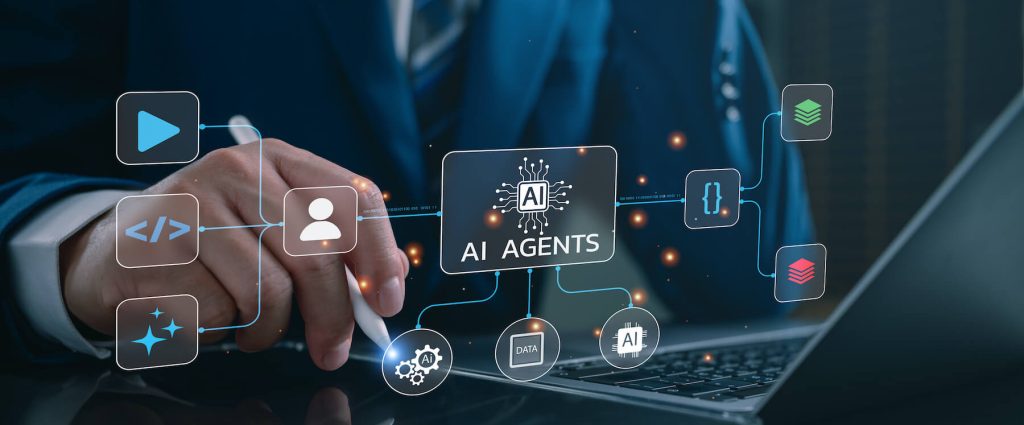
Both can sit behind the same chat window, so the interface tells you very little about which one you have. What separates them is how much authority the system has: whether it reports back and waits, or decides what to...
Every watt that enters an AI factory leaves it as heat. At conventional rack densities that is somebody else’s problem. At the densities training clusters now run, two decisions follow from it: how the heat gets removed, and how much...
Sovereign infrastructure arguments tend to stop at the data centre door. Everything past that door was designed in the United States and packaged in Taiwan, and the quantity available to you was decided by an allocation process you were never...
Most lifecycle phases are entered deliberately. Retirement is usually entered because somebody else set a date and the first sign of it is a downstream service returning errors on a morning nobody had marked. The distinction governing everything after is...
Ask what inference costs and you will be quoted a rate per GPU-hour because that is the number infrastructure providers publish. It is close to useless for a business case. Identical hardware serving an identical model can produce costs differing...
Doubling the GPUs on a training job rarely halves the time it takes. The first additions come close, each subsequent one returns less, and at some point the marginal GPU adds cost without moving the completion date enough to matter....
An agent pilot succeeds under conditions chosen to make success likely: curated documents, simulated integrations, restricted permissions and a developer watching every step. Those same conditions have to be dismantled before the agent can do useful work, and the dismantling...
Most AI infrastructure decisions in Europe fail somewhere other than where they were made. An accelerator is specified, then the site turns out to be unable to supply the rack density it needs. A model is selected, then the logging...
Cloud Security Alliance research commissioned by Token Security found that 82% of enterprises have AI agents running in their environments that nobody has catalogued, while 68% of the same organisations rated their visibility as strong. Only 21% had a formal...
Jensen Huang made tokens per watt a boardroom term at GTC 2026, arguing that a power-constrained data centre should be judged on how much intelligence it manufactures from its electrical envelope rather than on what its accelerators can theoretically do....
The serving layer between a model and the applications that call it is where most of that value is realised, or quietly lost. A trained model is a function: weights plus a forward pass. Turning it into something an application...
There is no universal interval, and any article offering one is guessing on your behalf. What can be measured is what each choice costs, and those figures are more surprising than the usual advice suggests. Researchers at Delft University of...
A dataset can sit in a Frankfurt facility, never leave it, and still be reachable by a foreign authority, because the company operating that facility answers to a legal system outside the European Union. Residency describes where data sits, whereas...
Most organisations meet this role by accident. They buy GPU capacity, hire people who can build models, and then find the cluster spends most of its life doing nothing. Cast AI’s State of Kubernetes Optimization Report measured resource use across...
The familiar case for an EU private cloud, in contrast to a US-based hyperscaler, is jurisdictional, and it is a very strong one: Under the CLOUD Act, a US-based provider can be legally compelled to deliver the data, no matter...
Just because something works when you put it live doesn’t mean it stays true. The world that the model learned has evolved and the only question is whether you spot it before your customers do. All deployed models are based...
The AI development industry is now so saturated with vendors that buyers no longer have time to vet everyone. The same capabilities are offered by all firms, and the lists ranking them are almost exclusively written by those same firms....
A big model takes dozens or hundreds of GPUs to train, and they have to remain perfectly synced as they work. At the end of every training iteration, they have to pass gradients and parameters between one another, meaning that...
Picking an enterprise AI agent platform isn’t a fresh dilemma, but the optimal choice in 2026 is now distinct from what it was a year back. The space has transitioned from a mess of clashing frameworks to a collection of...
Most AI projects do not fail on the model; rather, AI failures occur because of the journey to production, getting from a model that can work in an environment as simple as a notebook to a system that can run...
The argument for sovereign AI usually gets framed as a values question: do you trust European law more than American law to govern your data? That framing is comfortable and largely beside the point. Can you produce the documentation and...
A model registry that nobody updates is just a database. The vendors have already built the governance tooling; the hard part is making it produce a defensible answer when someone with authority asks a pointed question. AI model lifecycle management...
Fine-tuning has a reputation problem. Some see it as a magic wand, sure that feeding a model some company data will make it understand the domain. Others treat any change to the weights as a relic of the pre-prompting era. ...
Choosing the right GPU for model training is rarely as simple as picking the newest card. The decision shapes how fast a model trains and how quickly a team moves from experiments into a system it can run in production. ...
AI agents have moved from demos into everyday operations. Teams now expect software that can take an instruction, plan the work, pull from internal systems and finish the task without a person babysitting each step. A single capable agent is...
Generative AI is no longer sitting at the edges of business operations. Enterprises are deploying large language models and multimodal AI systems to handle decision-making and automation at scale, and as adoption moves from pilot to production, a consistent pattern...
For most of the past decade, European organisations have treated artificial intelligence the way they treat electricity: a utility you plug into, not something you build. The plug happened to sit in Virginia or Dublin, the latter technically on European...
Shipping a model is where the real work starts. Most AI teams find this out too late. A system that hit its accuracy targets last quarter can quietly degrade or expose the business to regulatory risk, sometimes both at once,...
Most AI projects die in the same place. Not in the lab, where the model hit its accuracy targets. Not in the boardroom, where the demo landed well. They die in the gap between a working prototype and a product...
Most organisations building AI today do not own their own GPU clusters. They rent them. GPU cloud computing gives teams access to high-density accelerator infrastructure for AI training and inference without the capital expenditure or lead times that come with...
AI agents are not an incremental upgrade to chatbots. They represent a structural shift in how software systems operate inside organisations. Where a chatbot processes a prompt and returns a response, an agent interprets context and plans actions, then interacts...
AI-ready infrastructure is a purpose-built stack where every component, from compute and storage to networking and cooling, is engineered to eliminate idle resources and sustain the demands of production-scale machine learning. It represents a fundamental shift from general-purpose data centre...